The Sale-Price Shortcut That Hides the Real Comparison
Learn the sale-price shortcut: compare the cost of what you will use, not the discount badge, so you can spot which offer fits your needs.
The sale-price shortcut is to compare the discount badges and assume the biggest reduction is the best offer. That shortcut ignores what you receive for the price: quantity, useful features and conditions can differ even when products look similar.
A better comparison starts with the job you need the purchase to do. Check how much of the product you will use, whether the options meet the same requirements, and what the advertised price includes. A sale label can invite a closer look, but it cannot decide which offer suits you.
Compare the amount you can actually use
For products sold in different pack sizes, look for the unit price: a cost per kilogram, litre, item or other stated quantity. If it is not shown, compare the listed quantities and prices using a calculator. Make sure both offers use the same unit before judging them.
The lowest unit price may still be a poor fit if you cannot use or store the larger amount. For goods that can spoil, consider the likely waste; for bulky items, consider your storage space. A larger pack may be practical if you use the product regularly and can keep it in suitable condition.
Check what the quantity includes. For example, labels may describe a product by drained weight rather than total contents. If the figures do not measure the same thing, look at the product details or ask the retailer before comparing them.
Define what makes two offers comparable
Start by naming the need. For a household cleaner, that might mean the same surface and type of cleaning; for a service, it might mean the same cover and included support. Then compare the details that could change whether the offer works for you:
- Check the quantity, weight, volume or number of usable items; if one offer provides more than you can use, compare the smaller usable amount instead.
- Check the material, ingredients, grade or finish; if an option does not suit the intended use, set it aside rather than treating it as equivalent.
- Check which accessories, parts or services are included; if you need a missing item, add its cost where available or compare another offer that includes it.
- Check compatibility with items you already own; if compatibility is unclear, verify it with the manufacturer or seller before choosing.
- Check delivery, set-up and other charges; if an extra charge applies, include it in the comparison or look for an offer without that charge.
- Check restrictions, exclusions and conditions; if a condition rules out a use you need, reject that offer or ask the provider to clarify it.
Not every feature deserves equal weight. Separate essential requirements from optional extras. A longer feature list does not make a version better for you if those extras will go unused.
Use the comparison method that fits the purchase
Unit prices help with similar goods
Unit prices are most useful when products are alike and quantity is the main difference. Compare the same unit, then check that the products have similar forms and intended uses. A concentrated cleaner, for instance, may not be comparable with a ready-to-use one by price per litre alone; check the directions and the amount needed for the job.
Specifications help with durable goods
For appliances, furniture or tools, compare features that affect the task, compatibility and expected use. Check the model name, included parts and relevant instructions. If a detail you need is missing, ask the retailer or consult the manufacturer’s product information instead of guessing.
A higher price or longer specification list does not automatically mean a better fit. Identify which features are essential, useful or optional, then compare the offers on that basis.
Total cost helps with services and bundles
For subscriptions, repairs, delivery plans and bundles, look beyond the headline price. Check what is included, what is excluded, how long the advertised terms apply and whether separate fees are relevant. Count bundle extras only if you would actually choose or use them.
If the terms are unclear, pause and check the provider’s details. Where a purchase has significant financial or contractual implications, a qualified professional may help you understand the terms before you commit.
Which sale-price comparison questions matter?
When should I use a unit price?
Use it when similar products come in different quantities. Confirm that both figures use the same unit and that the products suit the same purpose.
Does a bigger discount mean a better buy?
No. The discount describes the seller’s price reduction, not whether the product meets your needs. Compare what you receive with a similar alternative.
How should I compare two versions?
List the requirements that affect your use and check each version against them. Treat optional features as extras unless you expect to use them.
What should I do if offer details are unclear?
Check the product or service terms for fees, exclusions and compatibility. If an important detail remains uncertain, ask the seller or provider before deciding.
Work through the comparison before choosing
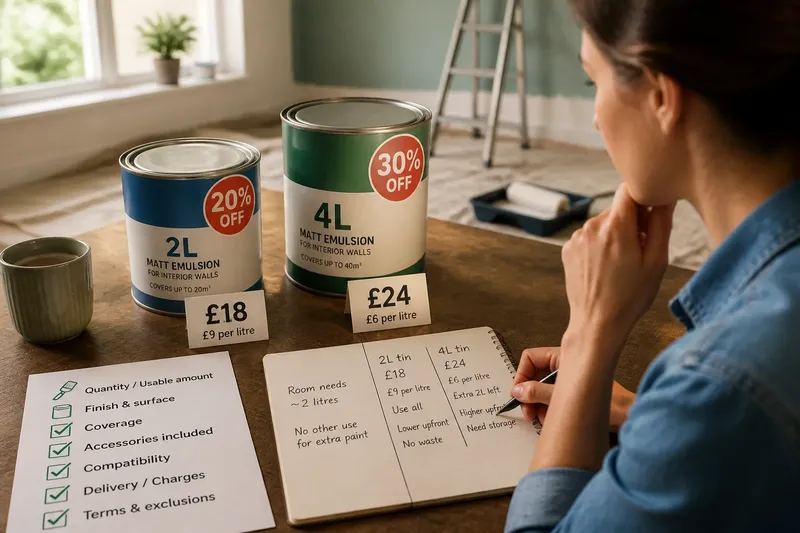
Imagine you need paint for a small room. The following prices and quantities are invented solely to show the arithmetic: one tin costs £18 for two litres, while another costs £24 for four litres. First, divide each price by its quantity: the first works out at £9 per litre and the second at £6 per litre. Next, check that both tins suit the surface and provide the finish you want. Suppose the room needs about two litres and you have no other use for the remainder: the larger tin has the lower unit price, but you would pay more upfront and have paint left over. If the smaller tin meets the job, it may fit the immediate need better; if you can use or store the remainder, the larger tin may be more suitable. The deciding trade-off is usable quantity, not the discount badge.
For a real purchase, use the quantities and prices on the current labels rather than the invented figures above. If both offers meet your essential requirements, choose the lower-cost option that provides an amount you can use. If one has a feature you genuinely need, include that difference in your decision.
Stop when extra comparison will not change the choice
It is not worth spending time investigating every minor specification when two ordinary options meet the same need and the differences will not affect your use. Focus on quantity, essential features, compatibility and charges that could change what you receive.
The sale-price shortcut is easiest to spot when you ask what each offer gives you for the cost. Compare the usable amount, check the features and conditions that matter, and treat the discount as one detail rather than the decision itself.