A Budget Is a Map of Priorities, Not a Scorecard
A budget map of priorities helps you assign expected income to real needs, spot trade-offs and adjust plans without treating every change as a failure.
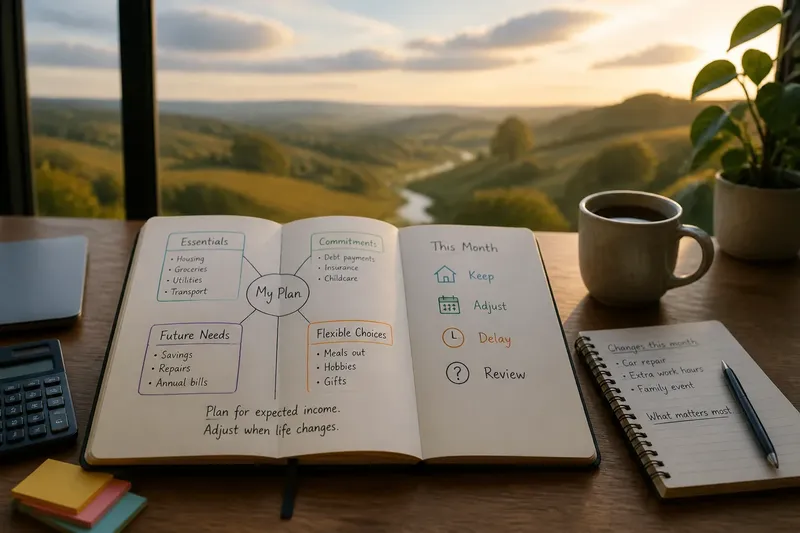
A budget map of priorities starts with the money you expect to receive and the bills that need to be paid. It helps you choose where income should go before competing costs arrive, without turning every change into a judgement about your character.
Think of the plan as a route through competing needs. Housing, food, transport, debt payments and personal spending draw on the same income, but their urgency and meaning differ from one household to another. A useful budget makes those claims visible so you can decide what to protect, adjust or delay.
Give expected income a clear purpose
Begin with income you can reasonably expect during the period you are planning for. If you receive a regular salary, use the amount that reaches your bank account after deductions. If your income varies, build the core plan around money you can count on and leave uncertain income out until it arrives.
Group likely spending by purpose. These categories can help you see what each part of the plan is meant to do:
- Essentials: rent or mortgage payments, basic groceries, utilities and necessary travel. If a cost keeps your household functioning, include it here; if not, choose a category that better reflects its purpose.
- Commitments: debt repayments, insurance, childcare or other agreed payments. If the payment is due regardless of your preferences, keep it visible; if it can be changed, note the available option.
- Future needs: savings, planned repairs, annual bills or other costs you expect later. If the cost is foreseeable, give it a place in the plan; if its timing or amount is unclear, record that uncertainty instead of treating the estimate as certain.
- Flexible choices: meals out, hobbies, gifts and other spending you can change more readily. If you want to protect the activity, plan for it; if income is short, consider reducing or postponing it.
These are starting points, not a prescribed formula. Travel to work may be essential for one person and irrelevant to another. A cost’s category depends on what it does in your life, not on whether someone else would make the same choice.
Assigning money on paper does not require perfect predictions. It means you have considered the main demands before they compete at the till or on a bill’s due date. If expected income cannot cover every planned purpose, the shortfall is useful information: it points to a choice about priorities, timing or support, rather than a verdict on your character.
Separate the plan from the spending record
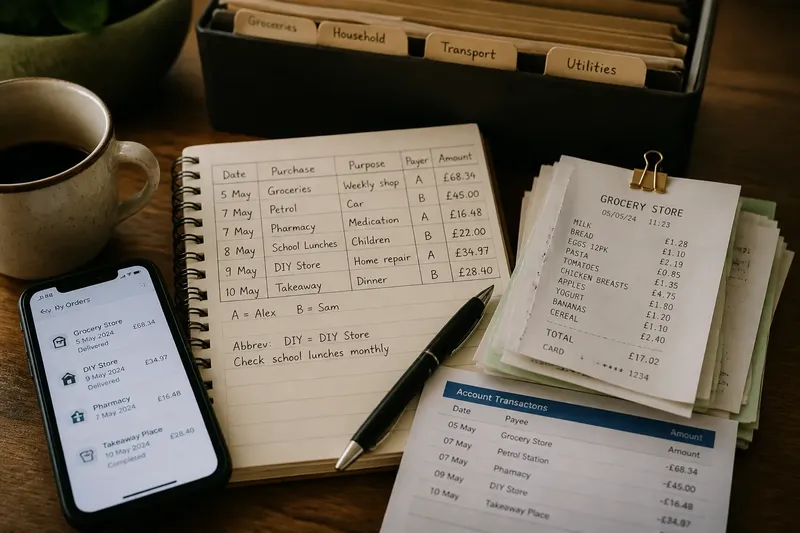
A budget looks forward. It describes what you intend to do with expected income. A spending record looks back and shows what actually left your account. They serve different purposes.
If your plan sets aside money for groceries and the final spending is higher, that difference does not by itself mean the plan has failed. Food costs may have changed, guests may have visited, or your first estimate may have been too low. Check the cause, then decide whether to revise the next plan, move money from another flexible purpose or accept the extra cost as necessary.
A scorecard encourages a pass-or-fail reading: on plan means good, off plan means bad. A map prompts a more useful question: given where I am now, what route makes sense next? If one category is higher than planned, check what remains elsewhere and decide whether to adjust another purpose or change later plans.
Choose categories that reveal real decisions
Broad categories make a plan easier to understand and maintain. If every small purchase has its own line, budgeting can become a clerical exercise. But a category can be too broad if it hides a decision you need to make.
Putting all spending under “living costs”, for example, makes it hard to see whether a tight period is driven by household essentials, travel or optional purchases. Splitting every shop into separate subcategories may add effort without helping you choose. Use the level of detail that makes a meaningful trade-off visible.
Name categories by their purpose rather than by whether you consider them virtuous. “Transport” is clearer than “necessary spending”; “social plans” is less judgemental than “treats”. A budget is not a ranking of morally superior and inferior purchases. It is a way to make trade-offs explicit, including choices that matter to your wellbeing, relationships or convenience.
Say you expect a one-off payment in addition to your usual income, but its arrival is uncertain. Leave it out of the core plan so the plan does not rely on money you may not receive. If it arrives, compare the bill due soon, a future expense and something enjoyable; then decide which use best fits your priorities. The observable result is a plan based on expected income, with a separate decision to make if extra money comes in.
Revise the plan when circumstances change
A budget reflects a particular set of circumstances, not a permanent ranking of what matters. A repair, changed work hours, a family commitment or a new goal can alter which purpose needs attention. Revising the plan makes sense when the conditions behind it have changed.
A priority is a purpose you want to protect when money is tight. A preference is a choice you may be more willing to alter, though the distinction is not always clear. The same item can occupy either place for different people: a regular lesson might be optional in one household and an important source of support in another.
When the plan no longer fits, ask what has changed, which commitments cannot readily move and what could be delayed or reduced. If a shortfall persists, consider whether income and necessary costs leave too little room, rather than assuming that the budget alone can solve it. For questions involving debt, benefits or financial hardship, a qualified adviser or reputable free money-advice service can help you understand possible options.
How can a budget handle uncertain costs?
Should I leave room for unplanned spending?
If your circumstances allow, include a broad amount for costs that are hard to predict, such as a household replacement or an unfamiliar bill. If there is no room, record that plainly rather than assigning the same income to more than one purpose.
What if my income changes from month to month?
Build the core plan around income you can reasonably expect, then decide how you might allocate extra income if it arrives. Keep essential commitments visible so a lower-income period does not depend on money that may not come.
Should I keep a category I rarely use?
Keep it if it represents a purpose you want to plan for, such as an annual fee or a possible repair. If it adds no useful decision and duplicates another category, combine it with a broader group.
Does spending more than planned mean I have failed?
No. It means the amount spent differed from the plan, and the cause needs a practical response. Check whether the estimate, the circumstances or the priority itself needs to change.
Work through a budget shortfall
Imagine you receive an invented take-home income of £1,800 for a planning period. You set aside £900 for housing and bills, £350 for groceries and travel, £300 for debt payments and £250 for flexible spending. These hypothetical amounts add up to the expected income, so there is no unassigned money in the plan.
Now imagine an unexpected household bill of £80 arrives. First, record it as a new cost rather than pretending it fits an existing category. Next, check which planned spending can change: suppose you decide that £50 of the flexible spending can wait and £30 of a planned grocery purchase can be postponed without affecting essentials. Then reduce those two planned amounts by £50 and £30, and assign the freed £80 to the bill. The revised plan accounts for the cost, while making clear that the trade-off is less flexible spending and a later grocery purchase. If neither adjustment is suitable, the plan still shows an £80 gap, signalling that you need another option or advice rather than a false balance.
Keep the plan simple enough to use
A budget that takes more effort to maintain than the decisions it supports can become a burden. A simple table with each purpose, expected amount and a note about timing may be enough. Separate accounts for every category, elaborate colour-coding and detailed forecasts for minor purchases are not worth the effort if they do not help you choose.
Keep categories clear, record assumptions that matter and leave room to revise. Return to the plan when a meaningful change occurs, such as a new bill or a shift in income, rather than treating every small variation as a crisis. A budget map of priorities is useful because it shows where money is intended to go and makes the next decision easier to see.