A Named Savings Pot or One Flexible Reserve?
A named savings pot or flexible reserve can clarify what savings are for, helping you choose a setup that keeps commitments visible while leaving room to adapt.

A named savings pot or flexible reserve changes how clearly you can see what your savings are meant to do. Separate pots make distinct commitments visible; one reserve leaves more room to adapt. Choose according to the decisions you need to make, not the number of labels your bank app can create.
Choose the structure that answers your main question
A named savings pot is money set aside for a purpose, such as replacing an appliance or paying for a planned trip. It might be a separate account, a virtual pot in a banking app, or an entry in a spreadsheet. The money does not have to sit in a separate account, provided you can track its intended use.
A flexible reserve is savings without firm divisions between goals. You decide what matters when a need arises. It can suit changing plans or anyone who finds several small balances harder to oversee than one pool of money.
Ask what confusion you want to prevent. If money intended for an annual bill keeps looking available to spend, a named pot can make that commitment easier to see. If you have several uncertain plans and do not yet know which will take priority, a flexible reserve avoids assigning money to a goal you may drop.
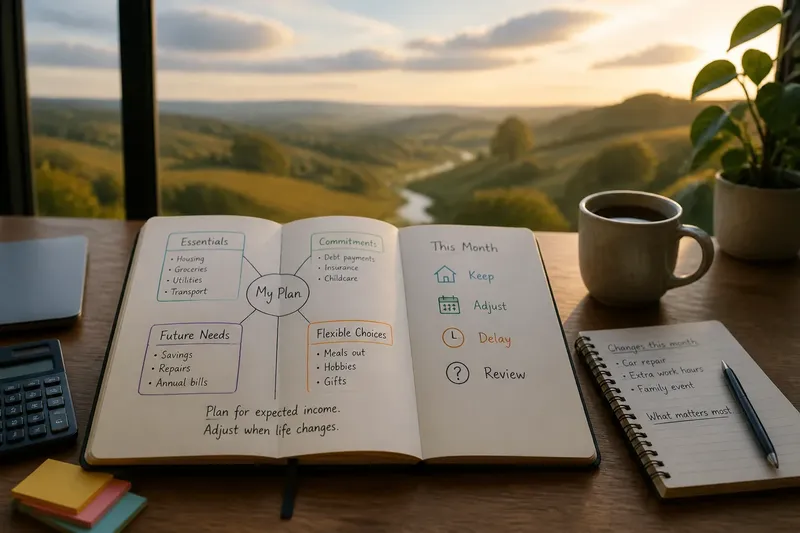
Before choosing, separate committed money from money that is genuinely flexible. Savings needed for an imminent bill should not be treated as available for another goal simply because both amounts sit in the same account. Check your account terms and any relevant commitments before moving funds; access conditions vary by provider and product.
Start with a structure you can maintain
Write down each current goal, why it matters, and whether its timing is fixed or changeable. Add a target only when you can make a useful estimate; an uncertain goal can still have a clear purpose. A note, spreadsheet, or banking app can hold this information.
Choose a starting arrangement that matches those goals. If a few distinct commitments would lead to different decisions, name those pots and leave the rest flexible. If several plans are tentative, keep one reserve and note what it may need to cover. In either case, make the system clear enough for you to understand later.
Decide how new savings will be allocated when money is available. If your income varies, use a rule that can change with it rather than assuming every pay period is alike. Keep the rule easy to revise; it should help you make choices, not create an obligation you cannot meet.
Review the arrangement after a meaningful change in your plans or at a regular point that suits you. Ask whether the labels still help, whether the reserve leaves you unsure what is available, and whether maintaining the pots takes more effort than it saves. Keep what answers a real question and change the rest.
Make labels useful without making them rigid
Good labels describe purpose rather than judging your behaviour. “Boiler replacement” says more than “responsible spending”. “Next move” may be more useful than a detailed plan if the timing is uncertain. A clear label helps you see the trade-off when another need appears.
Say you have a flexible reserve and are considering a laptop, but a family visit becomes more pressing. You note that the reserve could support either plan, then decide to use it for the visit and postpone the laptop. The resulting balance has a clear current purpose, and you can see what the decision delayed.
If you use named pots, decide what would justify changing their purpose. A car-repair pot might also cover another urgent transport cost, while a gift pot might have a firmer boundary. These are personal choices; writing them down beforehand makes the trade-off easier to recognise when circumstances change.
Check each pot against a real decision
- Check whether a goal has a distinct purpose; if you would handle it differently from other goals, keep a named pot, but if not, combine it with a related pot or reserve.
- Check whether money is already committed to a bill; if it is, keep it separate in your records, but if it is not, decide whether it belongs in a pot or the flexible reserve.
- Check whether you can track several goals reliably in one account; if your notes or spreadsheet stay clear, keep one account, but if balances become confusing, use separate pots or accounts where suitable.
- Check whether a goal’s timing or purpose is uncertain; if it may change, keep the money flexible with a note, but if the commitment is specific, give it a named pot.
- Check whether maintaining a pot changes what you would do; if it clarifies a trade-off, keep it, but if it adds administration without changing a decision, merge it with another pot.
- Check whether account terms or personal commitments limit access; if they do, leave the funds in place until you understand the conditions, but if they do not, make any transfer in line with your chosen purpose.
Which savings structure should you choose?
How many savings pots should I have?
Keep a pot when its purpose would lead you to make a different decision from other goals. If two labels would lead to the same choice, combining them may make the system easier to manage.
Can I use one savings account for several goals?
Yes, if you can track each intended amount in a spreadsheet, a note, or your bank’s pot feature. The account itself does not have to mirror every goal.
What is a flexible savings reserve for?
It leaves room to respond when priorities shift or an unplanned need appears. A short note about likely uses can preserve clarity without tying the money to one purpose.
When should I move money between named pots?
Review a pot when its goal is completed, postponed, or overtaken by a more pressing need. Record the change so the new balance reflects an intentional choice rather than an unexplained transfer.
Review the arrangement without constant reshuffling
Choose a regular moment to review the structure, such as after a major change in plans. Look at the labels, committed bills, and money you have treated as available. If nothing material has changed, leave the arrangement alone.
It is not worth creating a separate pot for every possible future purchase or changing labels whenever a minor preference shifts. Too much detail can make a system harder to use than the uncertainty it was meant to solve. A note beside one reserve may be enough for goals that are distant or vague.
A named savings pot or flexible reserve makes intentions visible, but neither arrangement has to be permanent. Start with the simplest structure that helps you distinguish committed money from flexible savings. Before moving funds, check whether account terms or your other commitments limit access.