Household Spending Records: Receipts, Ledgers and Digital Files
Household spending records help you find purchase details, check shared costs and keep useful evidence without holding on to every receipt.
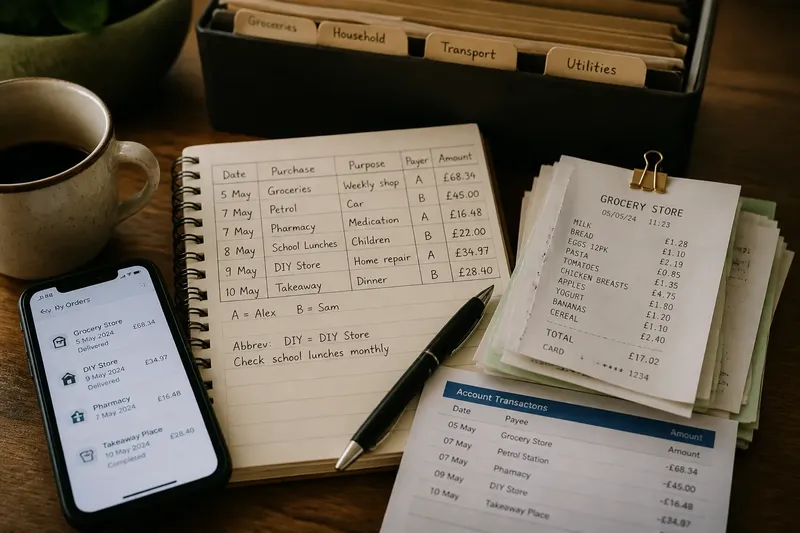
A bank statement can show a payment to a shop without revealing what you bought. Household spending records fill that gap: receipts, ledgers and digital files preserve different details and help you answer questions about purchases later.
Receipts preserve details a statement may leave out
A receipt records an exchange at the point of sale. Depending on the shop and transaction, it may identify the date, goods, amount and payment method. A bank statement, by contrast, usually records a payment and the payee as described by the bank, not a full list of items.
That difference matters when you need to check a charge, discuss a shared purchase or ask about a return. If a printed item description is unclear, a short note about what you bought can make the receipt easier to understand later.
Ledgers connect separate purchases to household plans
A household ledger is a record kept by the household, usually in a notebook or spreadsheet. It can list a date, purchase, purpose and payer. Unlike an individual receipt, it can bring separate transactions together, including cash spending or shared costs.
A ledger is only useful if its entries make sense to the people who rely on it. Write down what an abbreviated description means, and correct mistakes clearly rather than leaving an unexplained change. A missed entry may leave a gap, so compare the record with available receipts or statements when checking a particular cost.
Imagine a household that receives grocery deliveries and settles the shop’s account later. The householder records each delivery in a notebook and keeps the shop’s slips together. When the account arrives, they compare its listed deliveries with the notebook and slips. If one charge does not match, they can ask the shop to review that specific entry; the records clarify the question but do not settle it automatically.
Digital records offer convenience but need a filing habit
An emailed receipt, retailer order history and bank statement can each record part of a purchase. The statement may show the payment but not the goods. The order history may show the goods and delivery, while an email may contain details useful for a query. These sources complement one another rather than serving as identical records.
Use a filing method you can maintain. An email label or folder named for a household purpose can make receipts easier to find; a simple file name with the retailer and purchase date can help with saved documents. Keep account access private, and avoid putting sensitive payment details in an unprotected shared file.
Choose records by the question you may need to answer
- Check whether a receipt identifies the goods; if it does, keep it with records for a possible query, otherwise add a brief note or look for an order confirmation.
- Check whether a bank statement shows the payment and payee; if it does, use it to confirm money left the account, otherwise check the account’s transaction details or contact the bank.
- Check whether a purchase is shared; if it is, record the date, purpose and payer in a ledger, otherwise keep the receipt or digital record with the transaction details.
- Check whether a return or unresolved query is still open; if it is, keep the relevant receipt and correspondence together, otherwise decide whether the record serves another household need.
- Check whether a digital receipt can be found by retailer or date; if it can, keep it in that searchable place, otherwise rename or file it where the household can retrieve it.
- Check whether a paper record is hard to read or fading; if it is, save a legible copy where appropriate, otherwise keep the original with related paperwork if it remains useful.
Which household spending record should you use?
What does a bank statement tell me?
It can show that money left an account and identify the payee recorded by the bank. It may not explain which goods you bought or why the payment was made.
When is a receipt more useful than a statement?
A receipt may identify the goods or transaction details that a statement omits. Keep it while those specifics could help with a query, return or shared-cost discussion.
Can a household ledger still be useful?
Yes. A ledger can make cash payments, shared purchases or recurring arrangements easier to understand by recording their purpose and payer. A notebook or simple spreadsheet can work if the entries are clear.
What should I do if a receipt is lost?
Look for an order email, retailer account record or payment entry that helps identify the transaction. If documentation matters for a formal process, ask the relevant business or a qualified adviser what it accepts.
Keep records that answer a real household question
It is not worth keeping every ordinary receipt indefinitely simply because it exists. Keep records that help with an open query, a shared cost or another specific household need, and follow any relevant provider terms or local requirements for formal records.
Household spending records are most useful when you can retrieve them and understand what they mean. If you are deciding how to organise household spending records, start with the question you may need to answer, then keep the source that contains the relevant detail. A clear note beside a receipt can be more useful than a complicated filing system no one remembers to use.